

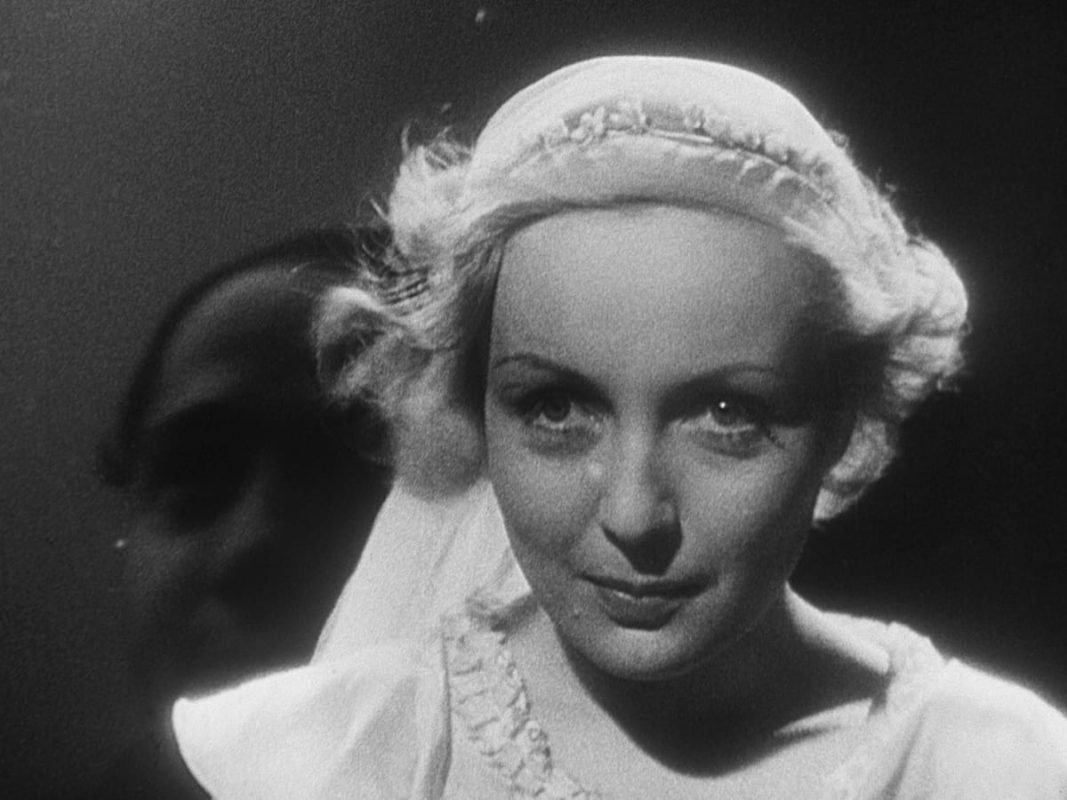
Among the saddest of all cinematic speculations is this: what if Jean Vigo had not died of tuberculosis at the tragically young age of twenty-nine? In a brief eyeblink of a career, Vigo produced just one feature film, two short subjects in the early Thirties, and one other film too brief to be a feature but too long to be a short subject. That would be all, but they were enough to establish him as the most exciting talent working in French cinema at the time. None of them is flawless – no movie is – but they readily demonstrate that Vigo could have been a truly great director had he been afforded enough time to mature as one.
Some may try to make an analogy to James Dean, who has similarly iconic status on the basis of a young life cut short after completing just three movies, but whereas Dean merely played a rebel on screen, Vigo was a true, committed revolutionary in art and politics alike. How would the Cinema of Resistance look had Jean Vigo lived past the early Thirties, during the darkest years for Europe and their aftermath? Would the New Wave have happened earlier or even been necessary at all had he been able to continue making films? Would the French Poetic Realism movement that Vigo helped pioneer have continued longer, or would Vigo, the committed anarchist, instead forgo any cinematic doctrine whatsoever?
Interesting Read: Memory as Resistance: How ‘Hirak Rajar Deshe’ and ‘Chorus’ Speak for the Silenced
It will never be known in this world. Perhaps some parallel universe out there has happy answers to all these questions. As it is, we have four films, totaling a little over three hours, to remain thankful for. Let’s not dwell too much on lamenting what could have been, and instead enjoy the treasures we do have at hand. Instead of listing Vigo’s films chronologically or in order of quality, we’ll take a cue from their auteur’s dismissal of convention and list them in order of running time.
1. Jean Taris, Champion De France (Jean Taris, Swimming Champion, 1931)
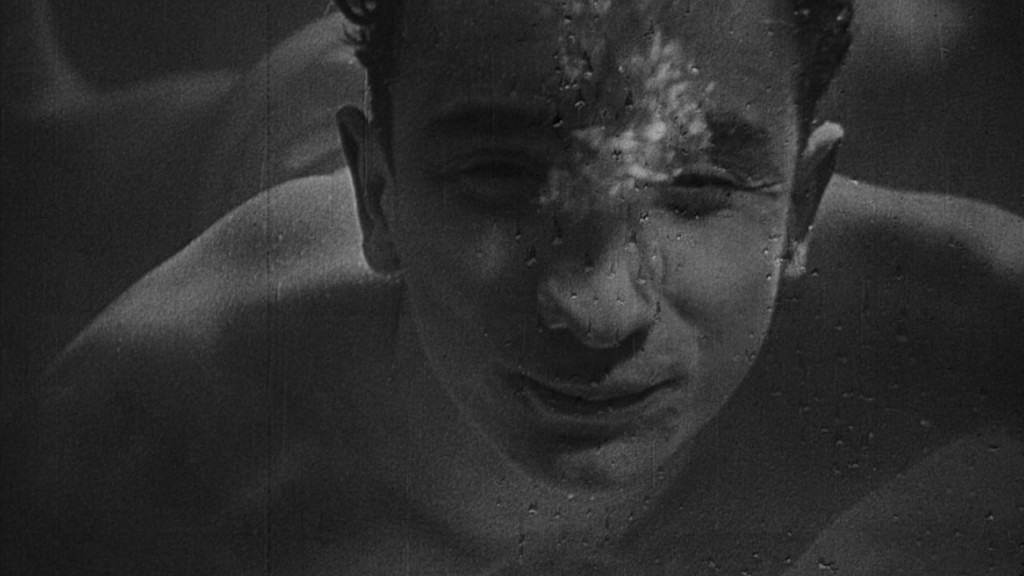
Vigo later disowned this ten-minute swimming instructional film focusing on French Olympic hopeful Jean Taris, maintaining that it wasn’t really “his” film as it was made on commission instead of on his own initiative. Indeed, according to Vigo authority (how’s that for an oxymoron?) Michael Temple, in his Criterion commentary for the film, parts might not even have been directed by Jean Vigo himself. It’s probably the least interesting of Vigo’s films, but that doesn’t mean nothing of interest happens during its brief running time
Other than when a shot of Taris diving into the pool is repeated and shown backwards, and an amusing ending that may have inspired the final shot of Hal Ashby’s “Being There,” there’s precious little of Vigo’s trademark surrealism. Overall, he seems to be less interested in filming his subject than in seeing how many different ways he can creatively film water in motion. There’s an emphasis on foam and bubbles, and a comparison between the graceful movements of the swimmer and the fluidity of the water waves themselves.
There are also some well-executed edits where scenes of Taris swimming that are shot with sound at regular speed suddenly cut to silent, slow-motion shots, a technique later borrowed by Steven Spielberg for the battle scenes in “Saving Private Ryan,” and reused by Vigo himself for the pillow fight scene in “Zero de conduite.” Possibly the most interesting thing about the film is a postscript regarding its subject: Jean Taris would go on to compete at the 1932 Olympics, winning a Silver Medal in the men’s 400-meter freestyle competition, just 0.1 seconds behind the American victor. The Gold Medal winner that year? Buster Crabbe.
2. A Propos De Nice (1930)
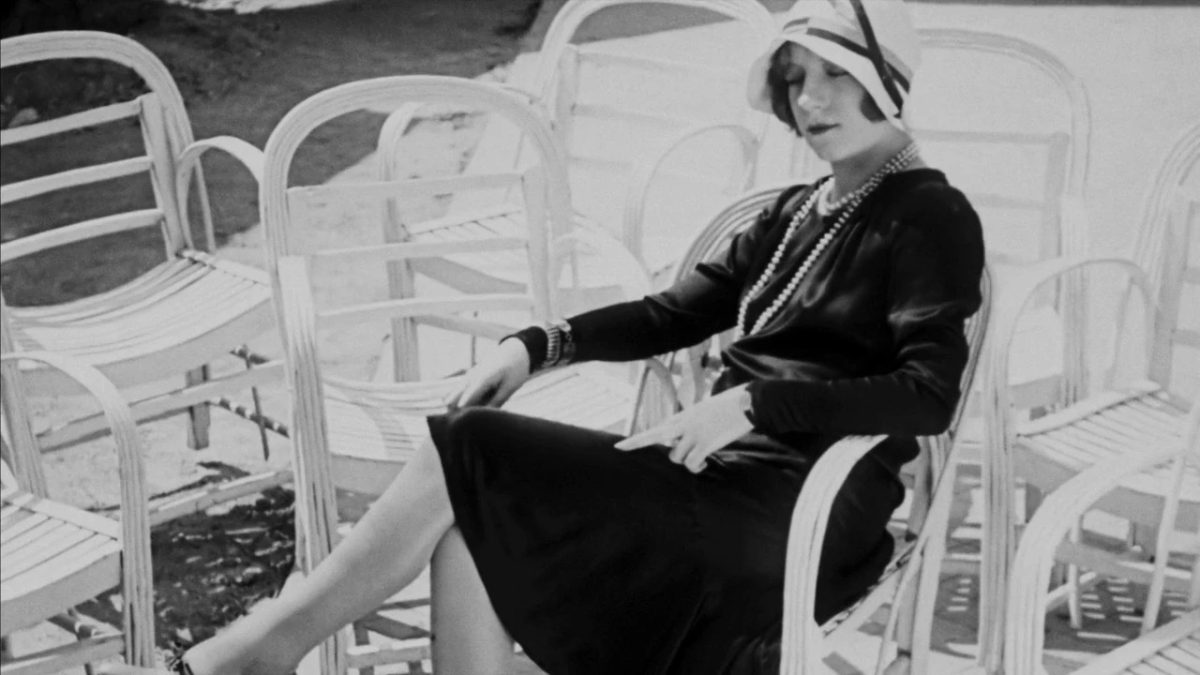
Vigo’s first film was co-directed with Russian cinematographer Boris Kaufman, who shot all of Vigo’s films and, years later, would emigrate to the United States to photograph the likes of “On the Waterfront” and “12 Angry Men.” Appropriately enough, it’s a movie that combines two national cinematic traditions, Soviet experiments in montage and urban observation, such as “Man With a Movie Camera” (directed by Kaufman’s brother, Dziga Vertov), and those French classics of abstract cinema, such as René Clair’s “Entr’acte” and Fernand Léger’s “Ballet mechanique.”
Vigo and Kaufman’s film not only signaled the eventual emergence of what would eventually be called Poetic Realism, but also the evolution of political filmmaking from dialectic to rhetoric. We can see here that Vigo was not just revolting against so-called bourgeois convention but the sour didacticism of Marxist dogma as well.
In contrast to the dour orderliness of Soviet montage, Vigo’s editing schemes are energetic, hyperkinetic even, epitomizing both the creative freedom offered by cinema and his political ideology. Jean Vigo regards the city not as a static confinement nor as a mechanical apparatus, but as an organic entity teeming with life and movement. It’s almost as if Nice were a living, breathing organism itself. There are some shots of people passing through the city streets that look like blood being pumped through veins and arteries. The dynamism of Vigo’s editing technique is meant to match that of the city itself, and even if you struggle to recall particular scenes, you will always remember constant movement and the rhythm and conjugation of cuts.
Must Check Out: 10 Films The HOF-men Recommend: 9th Edition
But just as in the most famous scene, where a woman’s clothing changes rapidly until she is nude in the final frame, Jean Vigo means to expose the true Nice underneath the sunny façade of leisure and celebration. We see children in poverty, workers toiling, and carnival revelers dancing in grotesque papier-mache costumes that are shown to be prisoners of social convention. And yet, there is still much happiness and joy to be found. Vigo’s message is a contrast between how our urban spaces are and what they all could be and should aspire to.
Even if one is sympathetic to Vigo’s point of view, there are disquieting aspects to his cinematic argument. Cutting from a close-up of a middle-aged, wealthy woman to a preening ostrich or from a sunburned tourist to a basking alligator is not only thuddingly unsubtle but rather mean-spirited. A brief shot of a leprous young boy in the Nice slums comes off less like an angry social comment than exploitation on the level of a Thirties roadshow film.
Feminist viewers will doubtless have much to say not just about the scene where Vigo “undresses” a woman through a series of dissolves, but when he later films some young women dancing in such a way that the camera seems to shoot right underneath their skirts, especially when the director joins them at the end. Is he trying to make a subversive commentary on the male gaze, or is he delighting in it?
Regardless of these and other potential criticisms, “A Propos de Nice” remains essential viewing for any serious film scholar and is a captivating twenty-five minutes. I recommend it to the novice viewer as an introduction to Vigo, and even if your viewing queue is currently crowded, you can surely make room in it for this one short.
3. Zero For Conduct (Zero De Conduite,1933)
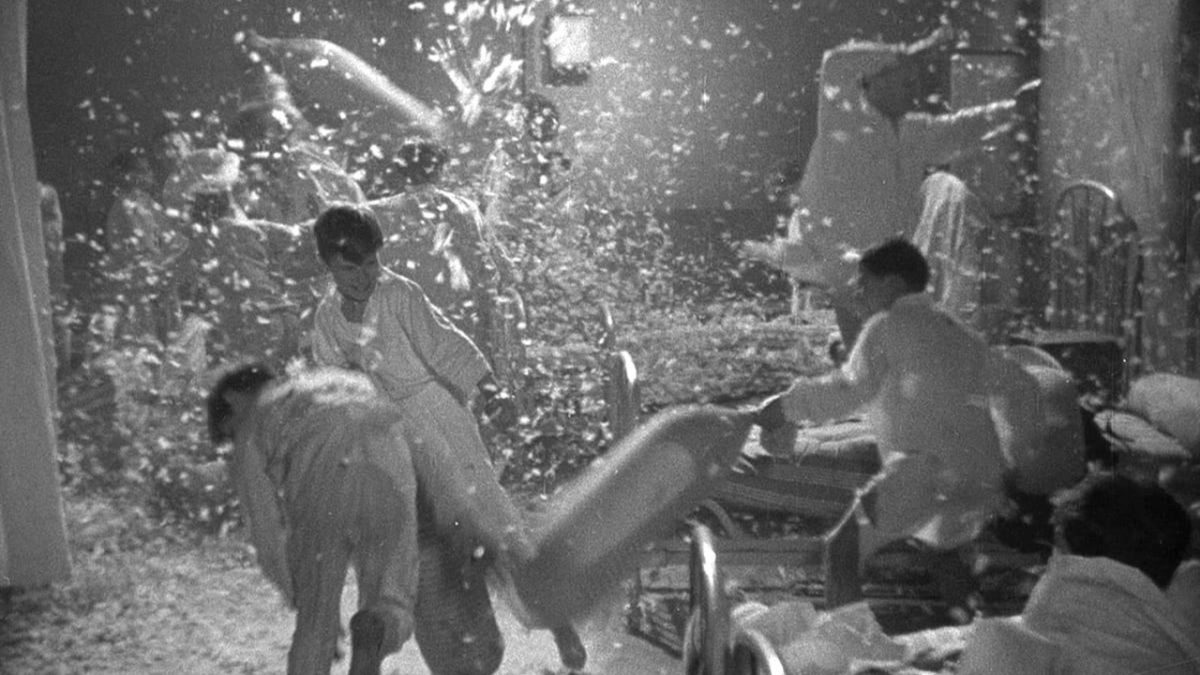
We finally arrive at Vigo’s most famous and influential film. All sorts of movies about scholastic rebellion, from “If” and “Dead Poets Society” to “Animal House” and “Rock N’Roll High School,” have directly borrowed from it, but its influence runs even deeper than such obvious homages. This was the Vigo film that most inspired the French New Wave. In particular, Francois Truffaut’s “The 400 Blows” owes a massive debt to it, and its impact can also be seen in Jean-Luc Godard’s oeuvre, especially his overtly revolutionary films of the late Sixties.
The story is a very simple one: some French boys in boarding school rebel against the dictatorial adults in charge. That’s pretty much it. In fact, everything about the film is facile and simplistic except for the technique: Jean Vigo incorporates some of his most famous surrealistic effects in this film, the most notable being a disappearing ball and a sketch that comes to animated life, a la Out of the Inkwell. But the most striking such moment is when the figure in a portrait seems to come to life, only to turn out to be a reflection in a mirror. Did Dario Argento watch this before he made “Deep Red”?
Also Check: 20 Great Movies That Students Should Watch
At just forty-four minutes long, “Zero de conduite” doesn’t have the space to provide proper character development or any sort of nuances to its storyline and argument. The dramatis personae consists simply of repressive authority figures and those who defy them, period. The most memorable character is the dissident enseignant who imitates Charlie Chaplin during recess and does a handstand at his desk (he reminded me of my own high school English teacher. Hi, Mr. Hill!). Otherwise, his heroes are a colorless bunch who’d be totally indistinguishable if it weren’t for their haircuts.
Throughout the film, Jean Vigo gives us scenes of behavior that are supposed to endear us as being quirky and playful, but would be deemed unacceptable in the real world by anyone with a shred of common sense, not just the one-dimensional fuddy-duddies who are the targets of Vigo’s ire. It’s all very Manichean and too simplistic for its own good. Consequently, the famous climactic moment of rebellion falls flat: we’re supposed to laugh at the authority figures losing face, but how is that possible when they aren’t given any dignity to lose in the first place?
At the same time, “Zero de conduite” leaves one with no room to get bored with such a brief running time. Being not quite a full feature-length film but not a short subject either means that it’s also a difficult film for exhibitors to place on a schedule, and if it does play at a revival house, it will probably be billed with another movie to fill out the extra space. Still, it’s probably one of those films that is probably best enjoyed with a theatrical audience to cheer it on, so don’t pass up the chance to do so, should it ever come up.
4. L’atalante (1934)
Vigo’s sole feature film is considered by many to be his masterpiece, and frequently pops up on lists of the greatest movies ever. I think it falls just a hair short of being one of the latter, although there is much about it that helps it come close. In any case, I am among those who consider “L’Atalante” to be Vigo’s best film, and the one that best displays the potential he could have achieved had The Fates not cruelly cut his thread so short. Certainly, it demonstrates Vigo was starting to master the intricacies of both filmmaking and screenwriting, displaying a level of self-control not evident in his earlier work. Perhaps it was starting to occur to him that discipline was not always a bad thing, as long as it was used towards constructive purposes.
Evidence of Vigo’s newfound self-discipline is that this is the most restrained of his films. There’s little of the self-imposed fantasy flourishes of his earlier work. An exception is probably the most famous scene in the film, where the hero dives into the Seine, and we see his true love seemingly floating in the water, but it’s made clear that he’s imagining his presence, as he was told he would find her there.
There’s also another moment where Jean Vigo seems to return to their overt surrealism when another character circles a gramophone record with his finger, and we hear music, as if his digit is taking the place of a turntable’s needle….then Vigo cuts away so we can see there is someone else in the same room playing the accordion. It’s the funniest scene in any Vigo film, and shows that the director was now much more comfortable with the use of sound, finding ways to work with it in conjunction with the action onscreen.
According to critic and historian Imogen Sara Smith, Poetic Realism proper really began around 1935, but with “L’Atalante,” we see Vigo moving away from Surrealism towards techniques that would eventually coalesce into the later movement as it would be properly defined. “A propos de Nice” was his first opportunity to experiment with them, but with his sole feature, he really put them to full use throughout. Although there is still some of the romanticism seen in such early French sound films as René Clair’s “Le million” that also served as precursors, it’s tinged with the bittersweet sentiments that would characterize the work of Marcel Carne and other mature practitioners of Poetic Realism.
Do Not Miss These Recommendations: The 20 Best French Movies of the Decade (2010s)
The storyline here is again simple, although it is not presented simplistically, as “Zero de conduite” was. It’s about how newlyweds Jean (Jean Daste) and Juliette (Dita Parlo) go on an impromptu holiday on the barge of the title, piloted by the crusty père Jules (Michel Simon) through the Seine. En route to Paris, they encounter strains in their relationship, briefly separate from each other while in the city, but eventually reconcile. It sounds so bland, so reminiscent of hundreds of thousands of romantic comedies and dramas made since, but it’s Vigo’s execution that helps it approach greatness. He gives us characters we care about, other characters that fascinate us, and much to talk about after it all ends. This is precisely the movie that Francis Ford Coppola’s unsuccessful but still underrated “One From the Heart” aspired to be.
Vigo’s status as a cinematic auteur is best demonstrated by how this particular film builds upon specific visual motifs he had introduced previously. He continued with this film a curious interest in filming the texture and fluidity of water, as seen by those beautiful shots at the surface of the Seine. Later in the film, the hero will dive into the river, and the bubbles will dance around him in a delicate aquatic ballet, in a direct echo of “Taris.” Another memorable scene of the boat drifting through a fog bank evokes the pillow fight of “Zero de conduite” as well, what with the way the vapors twist and turn like feathers in the wind. It seems as if Jean Vigo was fascinated by the movement of water in every state.
If you’re not interested in Poetic Realism or the romance between the two leads, the major reason to watch the film is Michel Simon as the ship’s first mate, a role well-tailored to the infamously eccentric and volatile Swiss-born star of the French cinema and stage. Although Temple compares him to Charles Laughton, he reminds me more of a cross between John Candy and Gary Busey, a live-action Popeye fifty years before Robin Williams.
He’s also sort of a more uncouth version of Bill Murray in “The Life Aquatic with Steve Zissou,” and cinematic Francophile Wes Anderson would later pay direct homage to the character’s grotesque tattoos in “The Grand Budapest Hotel.” Simon’s performance has also been cited as the basis for Anthony Quinn’s brutish strongman Zampano in Fellini’s “La Strada,” and I wouldn’t be surprised if it also influenced Phil Hartman’s Captain Carl on “Pee-Wee’s Playhouse.”
Simon’s père Jules is rude and crude and sometimes fascinatingly repellent (as when he shows off his tattoos), but at other times just plain disgusting (he spits…a lot). He can be very funny, such as in the early scene where he pretends to wrestle with himself. He can even be scary at a given moment, especially when another character finds the pickled, severed hands of Simon’s former sailing buddy that he now keeps in a jar.
And yet there’s also a sweet side of him that’s made evident whenever he shows kindness to his cats. He’s very much like a crotchety old tomcat himself, somehow lovable in spite of his irascible nature and gross behavior. If there’s a major weakness in the story, it’s that we can’t believe for a moment Jean would ever be jealous of him. Jules is hardly any woman’s idea of a dreamboat (at least not of any woman I know), and the mild flirtation between him and Juliette hardly justifies Jean’s subsequent acts of cruelty.
The aforementioned cat motif extends to other characters as well. Early on, Jean approaches Juliette on all fours and with a hungry grin, as if he were on the prowl and has sighted his prey. She, in turn, responds to his embrace by affectionately rubbing her cheek against his in a most kittenish fashion. When Jules accidentally cuts himself, Juliette half-sticks out her tongue as if about to lap milk from a bowl. Was Vigo commenting on how we are all just animals who, despite the illusion of domestication, are still controlled by elemental passions? The answer seems obvious in another scene near the end, still one of the most erotic in film history, where Jean Vigo cuts between his hero and heroine in their respective beds, caressing their bodies and testing the censors as they dream of their lost loves.
The film’s happy ending may seem tacked on, but I’m glad things turned out well for two characters I’d grown to genuinely care about. Vigo, alas, would not be granted a happy ending in the real world. The stress of completing his only true feature film while his physical health was already under massive strain contributed to his premature death just short of thirty.
I am not in a position to lecture on whatever lessons we may learn from the tragic loss of a promising young talent. I can only implore you, dear reader, to try to enjoy and appreciate what gifts this one man was able to bequeath to us while on life’s brief journey. And may you all have the chance to achieve your potential in the time you are allotted.
Read More: A Revolution on Reels: 15 Great Films from the French New Wave
Source link
